




If you’ve ever wondered, “Is it too late for me to...” the answer’s NO and The Uplifters are about to show you why. This space is for purpose-driven women who want to do big, brave things in the second half of their lives. I’m your host, Aransas Savas, and I’ve spent the last 20 years at the intersection of behavior change research and coaching.
It’s officially spring 🌸, so we are celebrating new beginnings all month long. Here’s what’s on tap:
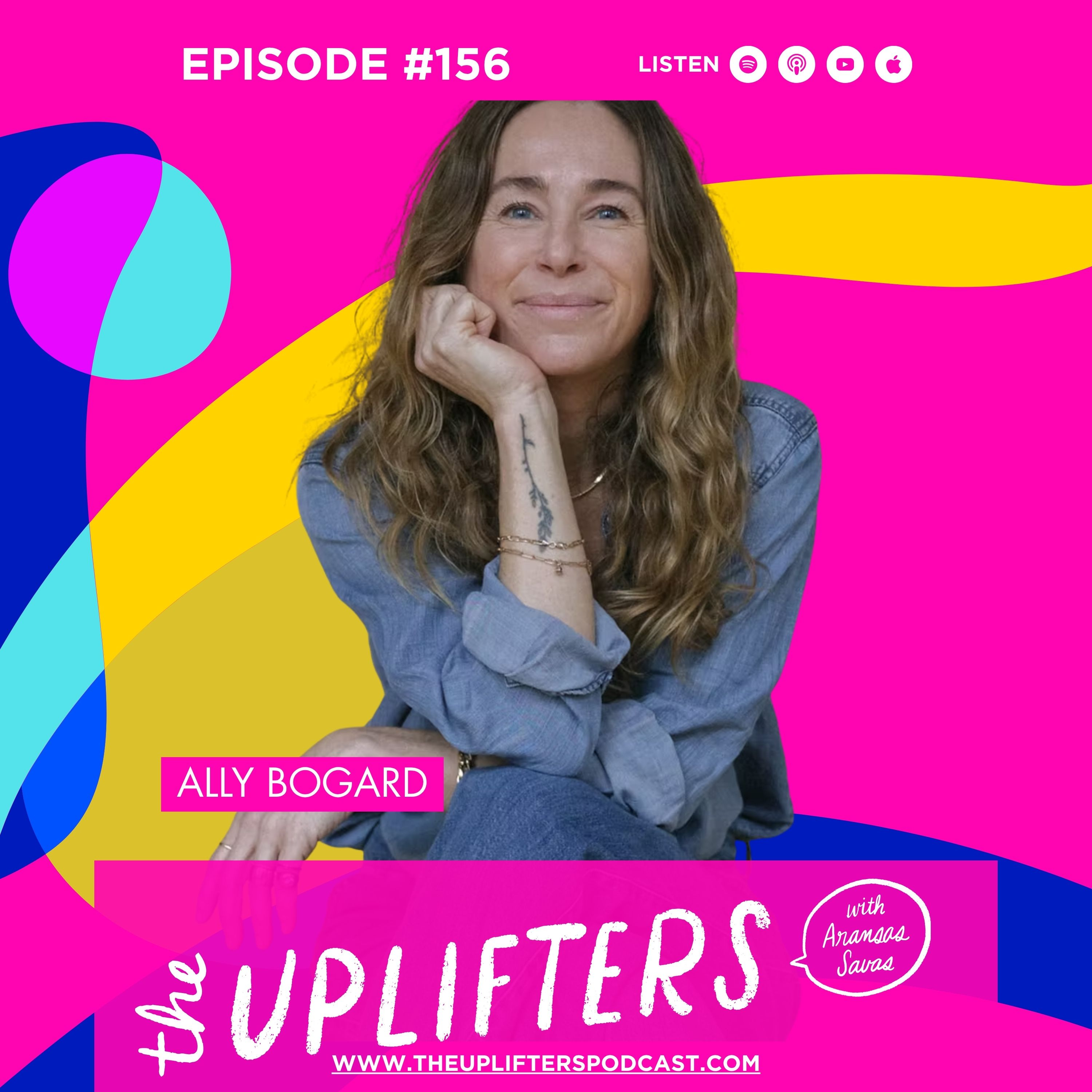
This week, meet Ally Bogard — a transformation teacher and somatic guide, who helps us finally confront all the sh*t we’ve been avoiding. She was nominated by the incomparable Elena Brower.
Next week, Blair Glaser — a memoirist, organizational consultant, and psychotherapist who joins us to talk about her years inside Siddha Yoga, a near-cult experience that cracked her open and ultimately led her to a deeper understanding of who she is. It's a conversation about the stories we tell ourselves, the ones we're afraid to tell anyone else, and what happens when we finally do.
Then, science journalist Sadie Dingfelder shares her extraordinary midlife experience with face blindness, memory, and how we make sense of the world in Do I Know You? — one of the most fascinating conversations we’ve had on the show.
And we’re closing out April the best way we know how: live. Join us for a conversation on funding our dreams with legendary VCs Lorine Pendleton and Katie Cella, in conversation with Whipnotic founder Tracy Luckow, at Uplifters Live.
Let’s go.
There’s a conversation I have with myself every January. I sit down with my journal in the early morning, coffee cooling beside me, and I write out everything I want. Everything I’m going to do. The big changes I’m going to make. And then I wait. Because if I’ve learned anything in twenty years of studying how humans actually change, it’s that winter is for dreaming and spring is for doing.
So many of us spend the early months of the year feeling like failures because the bold new chapter we promised ourselves hasn’t materialized yet. But we weren’t failing. We were preparing. Contemplation is a precondition for action. So, now that we’re here, I’m excited to finally share a conversation Ally Bogard and I had in the first days of the year about how to make this the year we actually do the hard things we keep putting off.
Ally came to us through Elena Brower, one of the most quietly powerful women I know (and one of the most succinct nominators I’ve ever had — her five-word case for Ally was: she’s my best friend, and she is THE best friend). Ally has spent more than twenty years teaching people how to get their minds, emotions, and bodies on the same page. Her work spans practice development, spiritual leadership, and somatic regulation — which is a fancy way of saying she helps people stop running from themselves.
What I didn’t expect was how much of this conversation would be about me. About the nice coat I sold because my midlife body has changed so much. About the conversation I’d been postponing with someone I love. About the manuscript sitting on my desk with an October deadline and the open tabs on my computer that multiply like rabbits every time I’m avoiding the hard thing.
What I love most about Ally’s work is that she doesn’t ask us to be more positive or push through our feelings. She asks us to get curious about them, to maybe even embrace the ugly bits. To stop trying to reframe our way out of discomfort and instead ask: what is this protecting? What am I holding onto?
We talked about avoidance — not as a character flaw, but as a teacher. We talked about the difference between procrastination and preparation. We talked about imaginary stress (the kind where we rehearse the argument that hasn’t happened yet, or the rejection that might come, and that our bodies can’t tell the difference between real and fake). We talked about what it costs to have too many open tabs — not just on your computer, but in our nervous systems.
And we talked about the great hunger Ally is seeing in her students right now: a hunger for real nourishment. Not quotes. Not content. Real connection and real depth.
Here’s what I have thought about almost every day since this conversation: the things we avoid don’t actually go away. They queue up. They become lingerers. And some quiet, patient part of us keeps tending to them, even when we pretend we’re not. Closing a loop doesn’t have to be dramatic. It can be a text that says, I want to talk when you’re ready. It can be three pages in a journal. It can be any tiny, specific, completable thing.
What the Research Says
Emily and Amelia Nagoski's research on stress cycles offers a useful frame here: the body doesn't just need to process a stressful event — it needs to complete the cycle. Without that completion, stress accumulates. It doesn't dissolve on its own just because the situation resolved. What Ally describes as closing loops is, in essence, exactly this — giving the nervous system the signal that it's safe to release what it's been holding.
Her Courage Practice
Where most of us are taught to sit with discomfort or breathe through it, Ally argues that the body doesn’t need meditation. It needs completion. A real stressor (the hard conversation, the overdue email, the thing you’ve moved on your calendar four times) gets metabolized once you do something in response to it. But an imaginary stressor (the fight you’re pre-having, the rejection you’re pre-grieving) just pools in the body as unspent stress chemicals.
So her practice is simple and not simple at all: she takes inventory. What is she actually avoiding? What is she imagining versus what is real? And then she asks: what is the smallest, completable action that closes this loop?
Not the whole conversation. Not the whole project. Not the whole relationship repair. Just the first tiny thing that lets the nervous system say: I did something. We’re not just sitting in it.
She does this for her students, for her own procrastination, and for the lingerers — the things that keep coming back up, keep getting postponed, keep quietly siphoning energy from everything else we’re trying to build.
This, she says, is how the big goals and dreams actually get to exist.
Listen to this episode if...
You’ve been telling yourself you’ll have that important conversation “when the time is right” for several months now
You have more open tabs — literal or metaphorical — than you can count, and the whole thing feels like a low hum of overwhelm
You want to want things but feel paralyzed by how big the wanting is
You’re trying to reframe your way to self-acceptance and it’s not quite working
You know what you should do. You just can’t seem to make yourself do it.
Lift Her Up
Visit allybogard.com/events to find out how to study with Ally — she works with individuals and groups on somatic regulation, inquiry-based practice, and helping the mind, emotions, and spirit get on the same page. You can also follow her at @allybogard on Instagram.
If you loved this story...
Listen to Elena Brower’s episode.


