




If you’ve ever wondered, “Is it too late for me to...” the answer’s NO and The Uplifters are about to show you why. This space is for purpose-driven women who want to do big, brave things in the second half of their lives. I’m your host, Aransas Savas, and I’ve spent the last 20 years at the intersection of behavior change research and coaching.
It’s officially spring 🌸, so we are celebrating new beginnings all month long. Here’s who’s on tap:
Ally Bogard — a transformation teacher and somatic guide, who helps us finally confront all the sh*t we’ve been avoiding. She was nominated by the incomparable Elena Brower. Listen HERE
Blair Glaser — a memoirist, organizational consultant, and psychotherapist who joins us to talk about her years inside Siddha Yoga, a near-cult experience that cracked her open and ultimately led her to a deeper understanding of who she is. It's a conversation about the stories we tell ourselves, the ones we're afraid to tell anyone else, and what happens when we finally do.
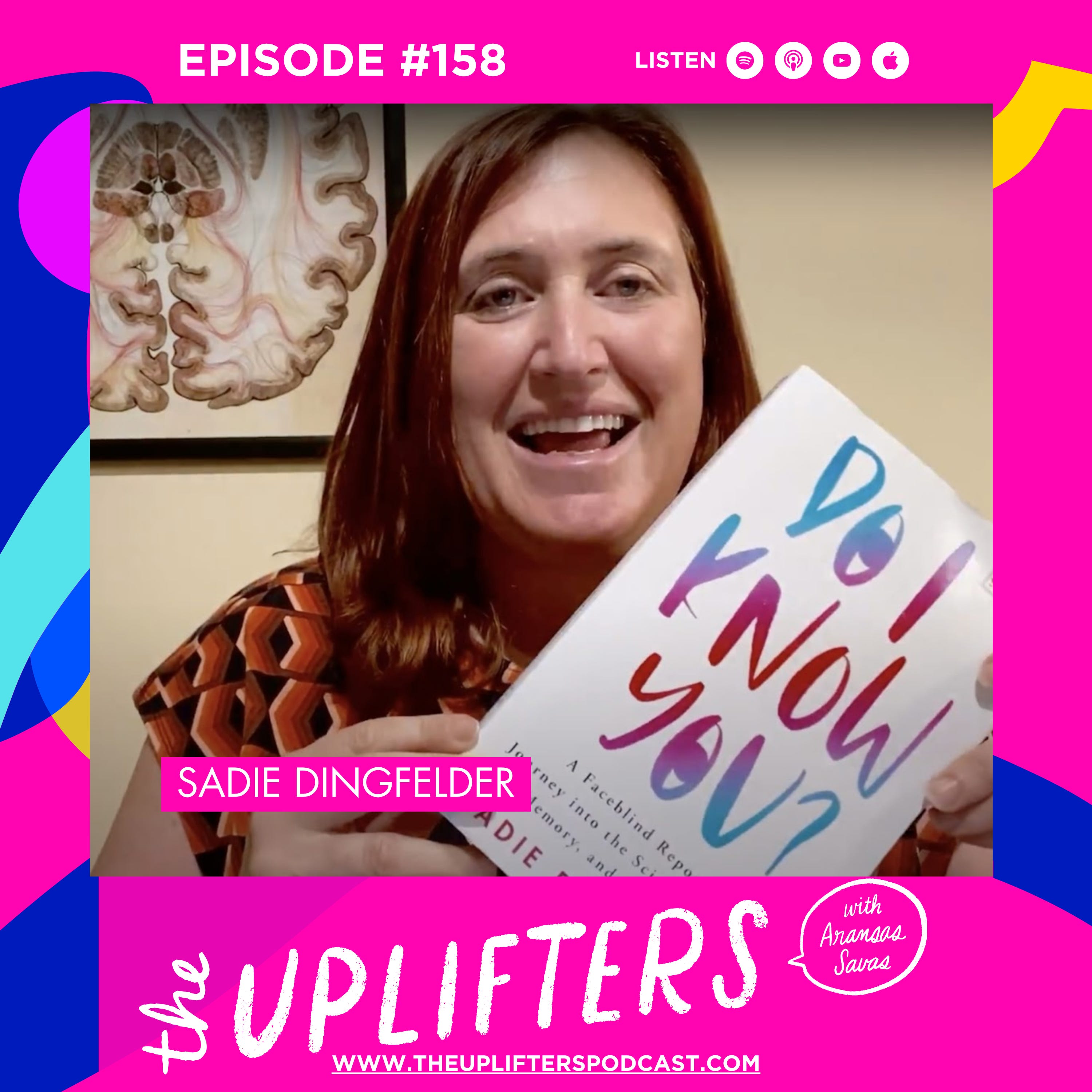
Then, science journalist Sadie Dingfelder shares her extraordinary midlife experience with face blindness, memory, and how we make sense of the world in Do I Know You? — one of the most fascinating conversations we’ve had on the show.
And we’re closing out April the best way we know how: live. Join us for a conversation on funding our dreams with legendary VCs Lorine Pendleton and Katie Cella, in conversation with Whipnotic founder Tracy Luckow, at Uplifters Live.
Let’s go.
This story begins with today’s guest at her local Safeway in DC, shopping alongside the person she knows best, her boyfriend and future husband, Steve -- a man who cares deeply about food quality and only ever buys the best. She grabs a jar of generic peanut butter from his cart and brandishes it like evidence in a trial. “Since when do you buy generic?” He stares back at her, horrified. His face morphs and contorts like something from a horror film. Over the next few seconds, she realizes the man she’s teasing is not Steve, but a Steve-shaped stranger who has no idea why she’s interrogating him about peanut butter.
This is how Sadie Dingfelder, longtime science journalist and author of the memoir-meets-science book Do I Know You?, discovered at 39 that she had prosopagnosia. Face blindness. A neurological condition that affects an estimated one in 50 people, most of whom have absolutely no idea. Sadie had spent nearly four decades assuming that the comedy-of-errors quality of her social life was just... her personality. Her quirky story-prone nature. It never occurred to her that her brain was simply working differently.
I read Sadie’s book in pieces, slowly, because every few pages I had to stop and tell someone what I had just learned. My kids. My husband. Whoever was nearby. It was part of every conversation I had for two weeks. It is that kind of book: wise and hilarious and bravely honest, and the kind of thing that makes you reconsider every assumption you’ve ever made about why people act the way they do.
After years of extensive testing, Sadie learned that face blindness was only one part of the picture. She is also stereo blind (meaning she sees the world largely in two dimensions, which is why she’s been knocking over glasses her entire life), and she has no real autobiographical memory, which means her inner life doesn’t include a replay reel of her past. She can’t visualize. She can’t re-experience moments. She learned all of this by going down the research rabbit hole after the Safeway incident, getting recruited into study after study by scientists who found her brain extremely fascinating. (One researcher is writing her entire PhD dissertation on how Sadie can’t navigate her own neighborhood.)
What makes Do I Know You? so remarkable is not just these discoveries. It’s what Sadie does with them. Because this story is not actually about face blindness. It is about what happens when you spend decades adapting to a brain you don’t understand, building skills you didn’t know you were building, becoming someone you couldn’t have planned to become, and then finally getting to see yourself clearly.
Sadie’s journey raises a powerful question: when is knowing yourself better actually freeing, and when does a label weigh you down before you have the foundation to carry it? In this episode, we talk about all of that: how her brain shaped her life in ways she couldn’t see, what she learned from finally looking, how the midlife happiness curve plays into this, and what it means to stop hiding our deficits and start working with the brains we have.
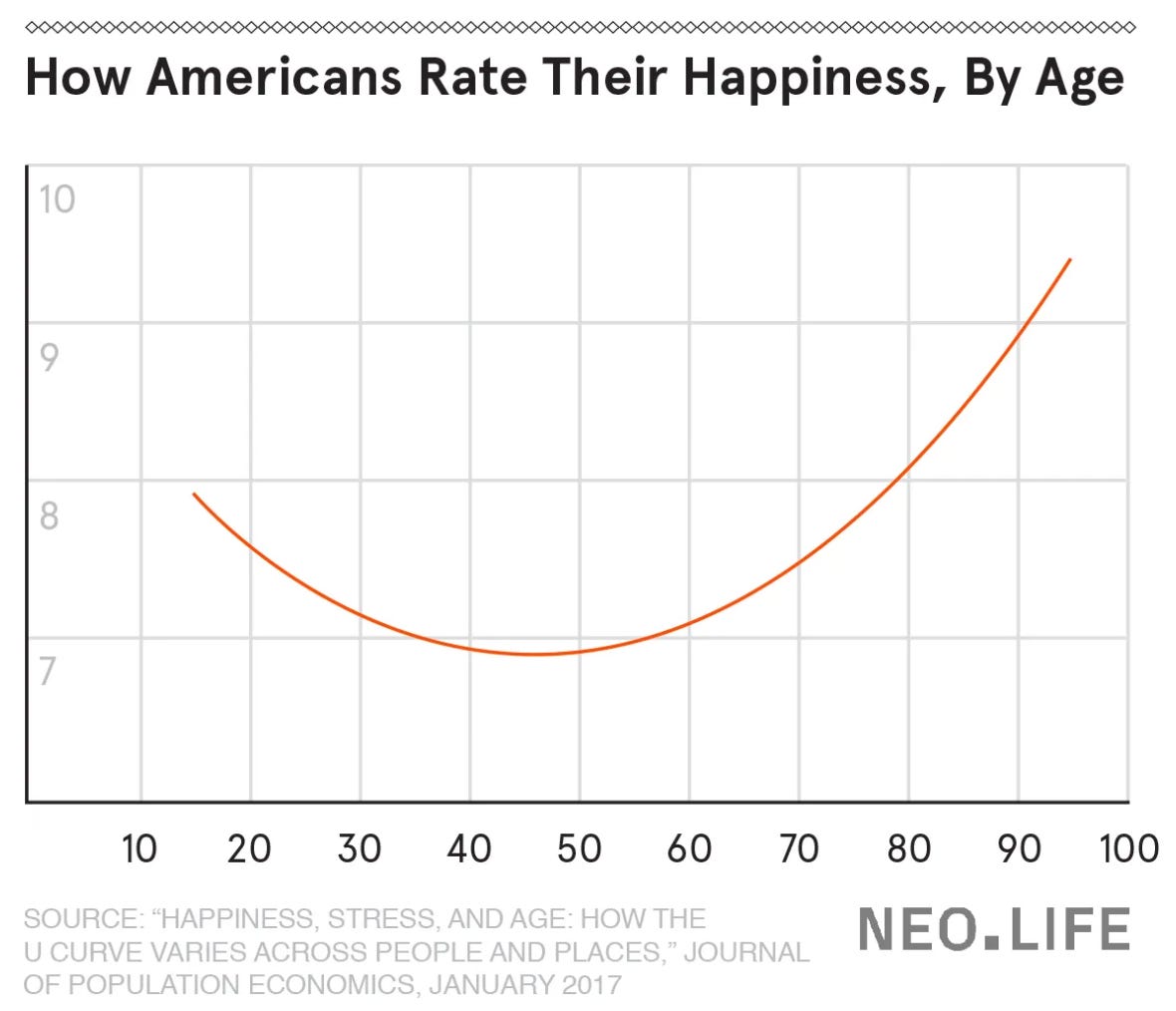
What the research says: The U-shaped happiness curve is one of the most replicated findings in psychology. Most people hit their happiness low point around age 45, then watch it rise again. This holds across gender, socioeconomic status, family structure, and human cultures worldwide. It even shows up in chimpanzees and bonobos when zookeepers rate their wellbeing. Researchers don’t fully understand why, but what Sadie and I both observe in midlife women is a shift from productivity as the primary value to purpose, a growing ability to care less about things that don’t matter, and an increased willingness to see themselves clearly. The courage to know yourself, it turns out, ripens over time.
5 Ways Sadie Dingfelder Shows Us How to Build Our Courage Capital:
Turns confusion into connection. Rather than treating her face blindness as a social liability, Sadie built a practice of treating every stranger like a potential best friend. When you don’t know who someone is, you can choose to be curious about them anyway. That practice, born of necessity, became one of her greatest professional and personal strengths.
Names the thing she couldn’t see. It took Sadie until age 39 to understand why her social life had the quality of an M. Night Shyamalan movie (obvious in retrospect, baffling in real time). The act of finally naming it, face blindness, stereo blindness, aphantasia, wasn’t about collecting labels. It was about being able to stop blaming herself and start understanding herself. Naming things accurately is a great step toward self-compassion.
Lets go of the hero’s journey she planned. Sadie set out to write a triumphant neuroplasticity story. She wanted to learn to recognize faces, see in 3D, visualize her memories. She largely failed at all of it. What she wrote instead is richer: a story about accepting the brain she has, building with the materials available, and discovering that the detour is often the destination.
Builds systems instead of pretending. She takes pictures of new colleagues. She keeps her friends’ kids’ names in her phone. She logs the information her brain won’t hold for her, so she can be fully present instead of constantly managing anxiety about what she can’t remember. This is courageous because it requires admitting, over and over, that she works differently. Most of us would rather keep performing.
Practices becoming process-oriented in midlife. Younger Sadie was intensely goal-focused. The work of her midlife has been learning to enjoy the journey rather than just sprint toward markers. She calls this the hardest new skill she’s tried to develop, which tells you something about how countercultural it is for high-achieving women. And how necessary.
Lift Her Up
Read Sadie’s book, Do I Know You?, which is out now (and in Italian and Korean, no South Korea book tour yet, but we are rooting for it). Find her on Substack at Sadie Dingfelder and on Instagram at @sadiefd and TikTok at @sadiedingfelder. If you read it and love it, please leave a review on Goodreads or Amazon. It makes an enormous difference.
If you loved this story...
You might also love our conversation with Gisela Sanders-Alcántara, a 13-time Emmy-winning TV producer and disability advocate who explores neurodivergence through storytelling, and Maysoon Zayid, a comedian and disability advocate whose work on changing how we see difference is unforgettable.
Your Turn
Have you ever discovered something about how your brain works, late in life, that reframed your entire story? Or is there something you’ve been quietly adapting to that you’ve never named? Share it in the comments. I want to talk about this nonstop, please and thank you.


