




If you’ve ever wondered, “Is it too late for me to...?” the answer’s NO, and The Uplifters will prove it to you. This space is for purpose-driven women who want to do big, brave things in the second half of their lives. I’m your host, Aransas Savas, and I’ve spent the last 20 years at the intersection of behavior change research and coaching.
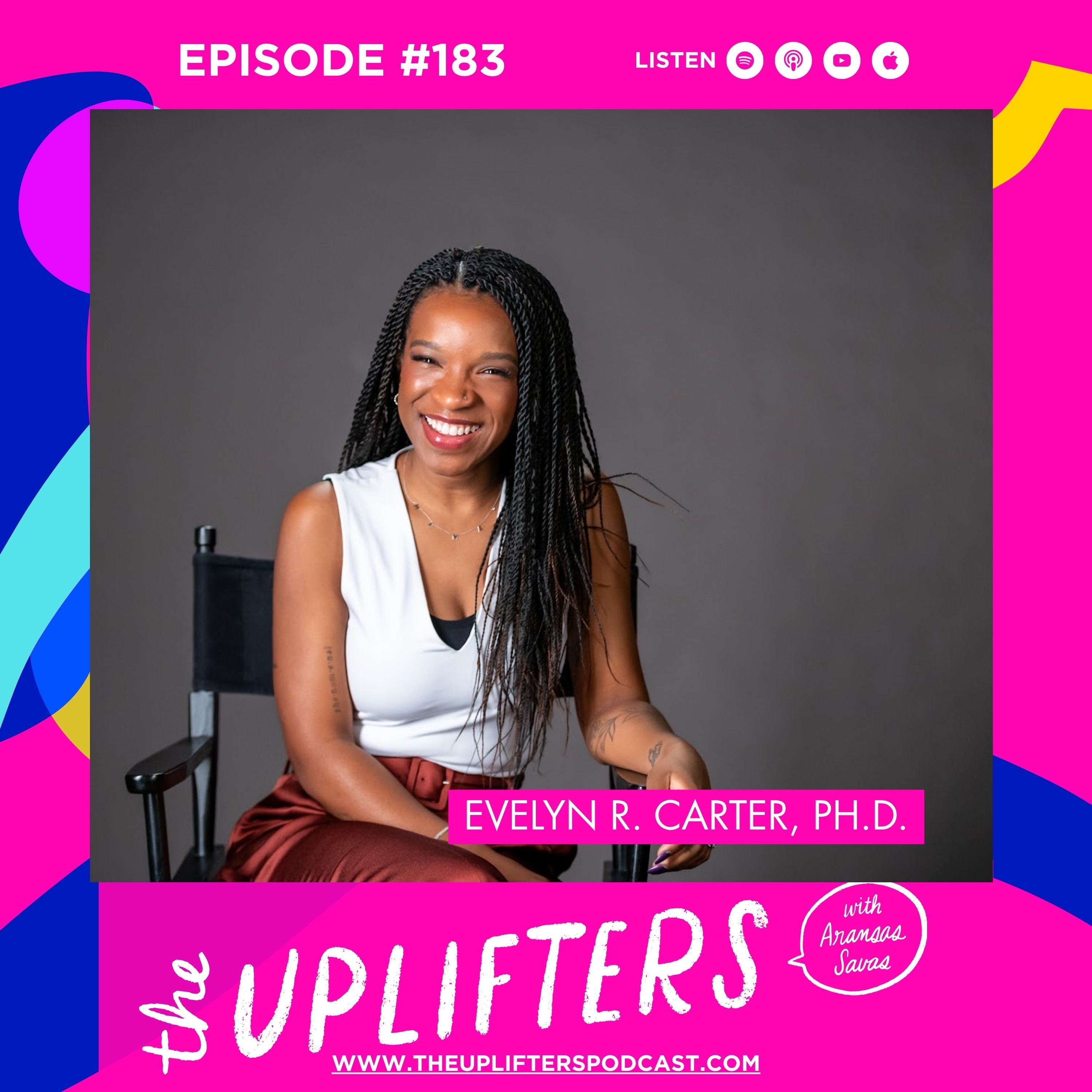
Dr. Evelyn Carter is a social psychologist with more than 15 years of experience helping organizations, from higher education to financial services to professional sports, learn to detect, discuss and interrupt bias. Her clients have included American Express, Burberry, Nike, the NFL, Uber and UCLA.
Recently, Evelyn was working inside a company, leading its diversity, equity, and inclusion efforts. Then the company renamed her team and changed what she was allowed to do. She could no longer use the words she had always used to describe the work, and she could no longer build the programs her research said were needed. She says it was eating her alive from the inside out, so she and the company parted ways.
She went back to consulting, leading workshops for managers who want to build inclusive teams. Working with many organizations lets her sustain the work financially, and the companies still calling and emailing keep her going in a soul way too. People say this work is dead. Her answer is that it will not be as long as she is still alive and holding the torch.
Her new book Was That Racist?: How to Detect, Interrupt, and Unlearn Bias in Everyday Life is that torch, and it is one of the clearest and most practical books I’ve read on the subject of racism in America. It also happens to have one of the best book origin stories I’ve ever heard.
In this episode, we go deep on both.
Evelyn’s mission is to give people who feel overwhelmed and hopeless something they can actually do about racism.
What the Research Says
Evelyn explains in the book and in our conversation how we can apply growth mindset research to bias.
When we believe change is possible, we are more likely to speak up when we see bias, because we think it will make a difference. We are also more likely to accept feedback without hearing it as a verdict on our character, because someone telling us we did something harmful is also telling us we can do better.
5 Ways Evelyn Shows Us How to Build Our Courage Capital:
Check your own mindset first. Before you decide someone cannot change, ask what makes you so sure. Your belief shapes whether you even try.
Make it safe before you step in. Evelyn sets the stage, tells people what to expect and reminds them they can handle it. You can do the same for yourself before a hard conversation.
Plant the seed. You will not change a mind in one conversation, but if you never plant anything, there is nothing for the next person to water.
Let shame be short, and then share what you learned. Evelyn reminds us that shame is meant to isolate, and that talking about what you learned turns a painful moment into a shared one. She is also clear that your tears should never matter more than the harm to the person you hurt.
Stay in alignment, even when it costs you. Evelyn left a secure job rather than doing the work in a way that didn’t feel true.
Lift Her Up
Buy the book or borrow it, hire Evelyn to speak with your organization, or simply talk about this stuff at your dinner table. You can find her at evelynrcarter.com on Substack at Evelyn R. Carter, Ph.D. and on Instagram.
Evelyn nominated her mom, Anne Carter, as our next Uplifter, so stay tuned.


