



If you’ve ever wondered, “Is it too late for me to...” the answer’s NO and The Uplifters are about to show you why. This space is for purpose-driven women who want to do big, brave things in the second half of their lives. I’m your host, Aransas Savas, and I’ve spent the last 20 years at the intersection of behavior change research and coaching.
This month, our theme is 💓LOVE💓. We’re exploring:
Mother love with Ruthie Ackerman (author of The Mother Code) on understanding the women who raised us, reconciling feminism and mothering, and reimagining this path in a way that feels right and true for ourselves
Friend love with Patina with Dina Aronson + Dina Alvarez on how later-life friendships and collaborations can unexpectedly change our creative paths
Self-love with Wendy Harrop, who said a giant yes to herself even though it meant courageously ending her marriage, moving across the country, and upending all the personal and professional structures she built in the first half of her life
Human love in the age of AI with Susan Ruth, host of the Hey Human podcast
Romantic love with Alyssa Dineen, a midlife dating coach who helps us rethink the stories we’re telling ourselves about navigating the mysterious and messy world of modern dating
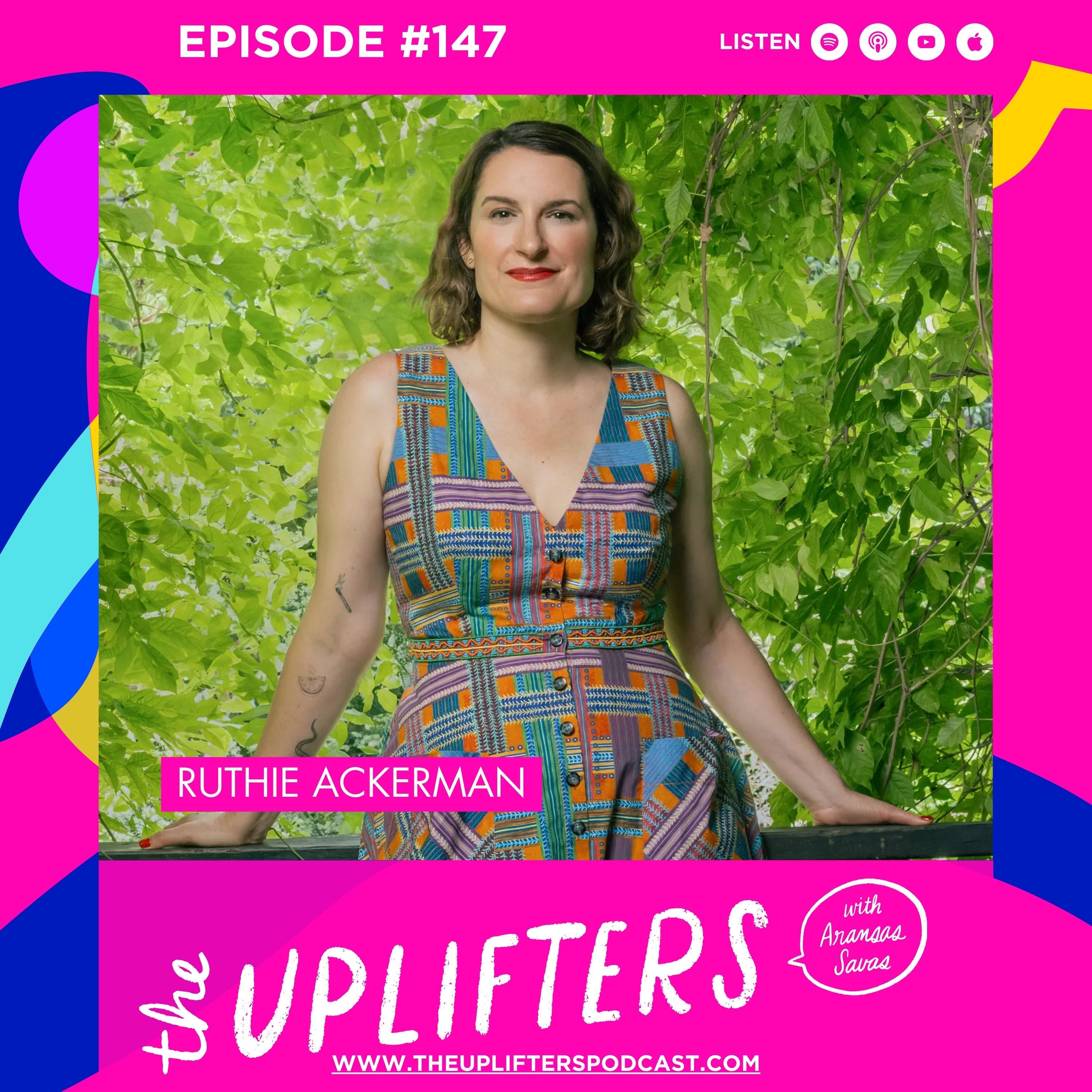
Ruthie Ackerman’s journey begins with this question: Should I have a child? She grew up believing that she came from “a long line of women who abandoned their children” and internalized a belief that something was fundamentally flawed in her genetic code, some inherited inability to mother well.
So she made choices that aligned with that story. She became a journalist, building a career that took her around the world. She married a man who didn’t want children, which made perfect sense at the time because she didn’t either. The pieces fit together neatly, like a self-fulfilling prophecy dressed up as responsible decision-making.
But then in her research for what would become her memoir The Mother Code, Ruthie dove into medical records, census data, divorce and marriage certificates, trying to understand the truth about her great-grandmother, grandmother, and mother. What she discovered wasn’t just historical facts, but permission to ask a different question: What if the story she’d been told wasn’t the whole truth? And if that story wasn’t true, what else might be possible?
At 43, she became a mother, but not just any mother, she became an “outlaw mother” by searching for examples of women who mothered while also pursuing their creative work, their ambitions, their full selves. She found them in Toni Morrison, in Barbara Kingsolver, in communities of Black and brown women who had always created alternative kinship networks out of necessity. These weren’t the trad wife narratives or the childless cat lady stereotypes many of us were told to choose between. These were women who refused the binary, who showed her that motherhood could include both the loving caregiving she wanted and the explorer-adventurer-dreamer spirit she inherited from the women in her family.
Even with her memoir published and critical acclaim, the work of being an Outlaw Mother is an ongoing practice of challenging internalized beliefs. So in this episode, we talk about what it takes to keep showing up to the page when your inner critic is screaming that whatever you’re working on won’t be anything, that nobody will care, that you should be using your time more productively. We dig into how she’s learned to close the door and write, how she structures her life to protect her creative time, and how she maintains her courage when facing rejection and self-doubt in one of the most vulnerable creative acts there is: writing your own story.
Her Courage Practice
Ruthie’s courage practice is simple and powerful: she puts time on her calendar that says “You’re a writer, so write.”
On the days she’s meant to be writing, she gives herself her morning hours because those are her best hours. Then she does client work, chores, all the other demands of life later in the day.
This practice ripples out in powerful ways. It challenges the deeply internalized belief that women should only create after all the caregiving is done, after everyone else is taken care of. It models for her daughter what it looks like when a woman prioritizes her work, her voice, her contribution to the world. And it creates a tangible structure that her brain can rely on, a routine that makes it slightly easier each time to ignore the voices that say she’s not a “real” writer because she’s not making the majority of her money from writing.
5 Ways Ruthie Shows Us How to Build Our Courage Capital
Question the stories you’ve inherited - Ruthie didn’t just accept the family narrative about women who abandon children. She did the research, read the records, talked to family members, and discovered that the story was more complex than she’d been told. Sometimes our most limiting beliefs are just stories waiting to be investigated. What if you approached your own limiting beliefs like a journalist, asking: What’s the evidence? What’s the full story? What might be missing?
Turn your inner critic’s volume down, don’t try to silence it - When Ruthie sits down to write and hears the voice saying “nobody’s gonna care,” she doesn’t try to argue with it or make it go away. She says, “I hear you. I see you there on my shoulder saying those mean things. I am not gonna listen to you. I’m actively ignoring you right now.” It’s the difference between fighting the voice and simply choosing not to engage with it.
Make yourself real by putting yourself on the calendar - Ruthie’s calendar block that says “You’re a writer, so write” works because it makes her creative work as real and important as any client meeting. When you schedule something, you’re declaring it matters. You’re giving your brain concrete permission to prioritize it. What would change if you put your brave work on the calendar with the same integrity you give to everyone else’s demands?
Embrace the beginner’s mind at any age - At 43, Ruthie became a first-time mother. At 48, she’s working on her second book and still discovering what she doesn’t know about her craft. She reminds us that expertise is overrated and that some of our best work comes from being willing to be beginners, to not have it all figured out, to learn as we go.
Let support in - Ruthie’s journey to overcoming her pattern of over-functioning started with finding a partner who said “I’m on your side.” Learning to let Rob support her, to believe he wants what’s good for her, has been an ongoing practice in trusting that she doesn’t have to do everything alone. Sometimes the bravest thing we can do is let ourselves be loved and supported instead of always being the one who takes care of everyone else.
Lift Her Up
Grab Ruthie’s memoir The Mother Code wherever books are sold (available in hardcover, paperback, and audio narrated by Ruthie herself!). Follow her on Instagram at @ruackerman and connect with her on LinkedIn at linkedin.com/in/ruthieackerman. If you’re working on writing your own story, check out The Ignite Writers Collective where Ruthie offers coaching and community for writers at all stages.
Let’s chat about it!
Is there a story in your family’s history that you saw in a completely different way later in life? Share in the comments!


