


Last week I wrote about the regrets we carry from choices we already made and how they can shape the choices we make in our next chapters. My DMs, email, texts, and voice notes filled up with people whispering their regrets to me, confiding in me about things they wished they’d done. Clearly we want to talk more about this.

So this week I want to look forward, because one of the most powerful ways regret can serve us is by trying to avoid it.
When I was working on innovation at Weight Watchers, we did research on what actually moves people to change. We tested plenty of motivators: hope, health scares, vanity, social pressure. But one of the strongest predictors of real, sustained behavior change was the fear of future regret. People who could clearly picture themselves five years from now, still stuck, still having not tried, were far more likely to act today than people motivated by almost anything else.
In the 200 interviews I’ve conducted to understand midlife transformation, I’ve asked women how they managed uncertainty and resistance to do epic shit. Over and over, their answers have been the same. “I knew I’d regret not doing it more than I’d regret doing it and making a mess.”
The research backs this up. Psychologists call it “anticipated regret,” and it turns out imagining how we’ll feel about a choice later is one of the most powerful levers we have for making a different choice now. It’s more motivating than fear of failure or the promise of reward. We are, it seems, more moved by the person we don’t want to become than by the person we hope to be.
So here’s the question I asked people over and over last week: What are you not doing, or only half-doing, right now that you might regret someday?
Maybe you’re waiting for someone else to give you permission, or hedging your bets on your audacious goals, or only whispering them when you really want to shout them.
For me, I’m doing a TEDx talk tomorrow that I feel like I’ve been working toward for my entire life. It’s a celebration, through science and story, of the way my best friend, my grandma, shifted people’s beliefs about what’s possible in the second half of life. Research shows us that we are significantly more likely to improve mentally and physically in the second half of life if we believe that it’s possible. My grandma did that for everyone she met. And it’s my deepest hope that my talk will do that too.
I’ve set a goal of reaching half a million people with this story, because I believe it’s what I was born to do, and that it’s the best way I can serve the legacy of the women who came before me and those who are coming up behind me. I don’t want to look back in a couple of years and feel like I squandered the gift of this moment.
So, I’m committing to you right now not to half-ass it, but to full-ass it (if you’ve ever walked behind the women in my family, you’ll know that we are literally quite full-assed, so it seems appropriate). Part of that will be asking for your help getting the word out when the talk releases, so consider this my heads-up that I’m a woman on a very full-assed mission.
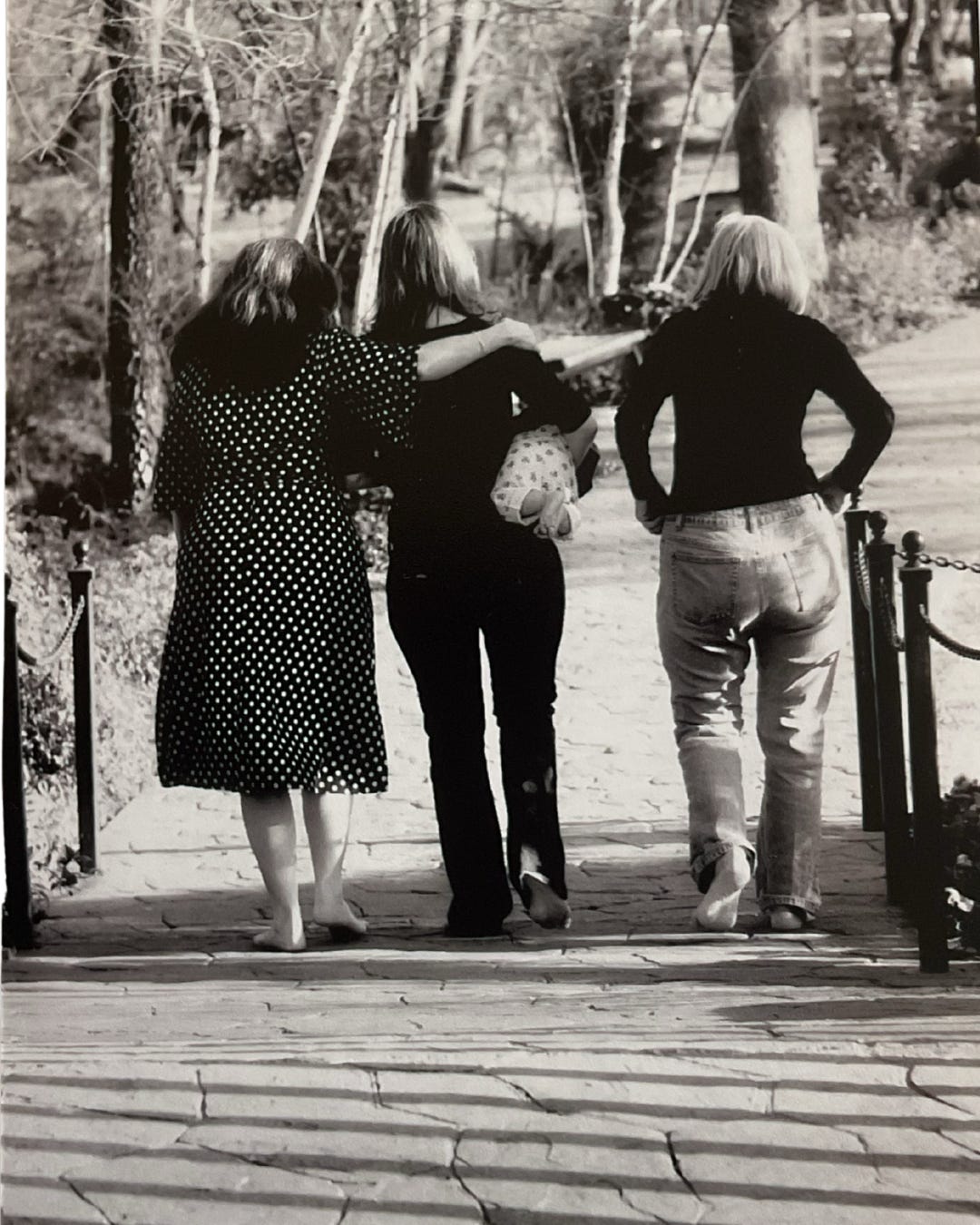
It feels very, very good to be all-in, like traveling as the crow flies instead of wandering a mysterious and cloudy path.
As last week’s pod guest Kristy Halvorsen challenged us, “What would you do if you knew you couldn’t fail?”
