


The latest episode of This American Life, The Argument, is a must-listen. Ten years ago, Nikole Hannah-Jones wrote a piece in The New York Times Magazine that went viral and sparked nationwide conversations about the inequities in our education system. Nikole and her husband chose a neighborhood public school for her daughter, Najya, inside one of the most segregated school systems in the country, a school most wealthy and middle-class parents went to extreme measures to keep their kids out of, to create systemic change from the inside.
This week, she revisited that choice in a series of conversations with her now 16-year-old daughter and Chana Joffe-Walt. I won’t spoil it, but I’ll tell you this much: Nikole has some regrets. She was doing something she believed in. Now, with more perspective, she sees things differently.
It got me thinking about one of my own biggest regrets: breastfeeding my daughters.
At the time, my career was on fire. I was the girl you could count on to show up every day in every way, first one in, last one to leave, kind and cheerful no matter what. Then I had a baby, and I heard the good thing to do was nurse her for every meal of every day for a full year. That sounded hard. But I was a girl who could do hard things.
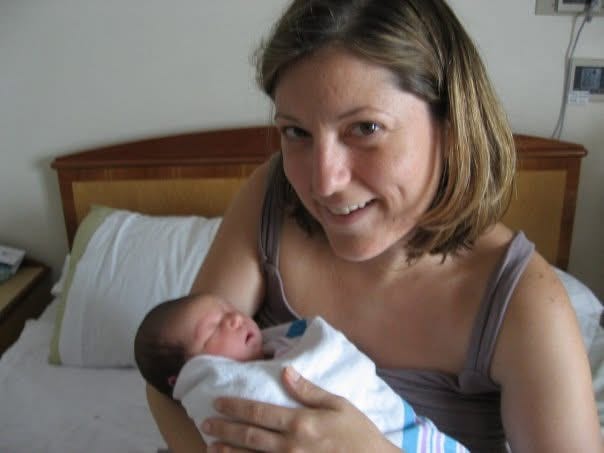
So every weekday for the first year of my daughter’s life, I strapped her to my chest and rode the subway to a daycare a mile from my office. I’d nurse her one last time at drop-off, fingers drumming, anxious about being late to work. I’d hustle for an hour or two between conference rooms, then squeeze into a cramped pumping room, trying to mask the mechanical thump-thump-thump of the pump while sounding like a boss lady on a conference call. At noon, I’d slip on running shoes, speed-walk a mile to daycare in my fancy clothes, feed her again, and speed-walk back while shoving a granola bar in my mouth (if I’d remembered to bring one in my zombie haze).
At night, I’d work into the wee hours with a baby attached to my chest, then wake up and do it all again. I was being a good mom and a good employee. I could run on no food and no sleep for a few years, powered by sheer commitment. Worth it, if it meant being good. Right?
I was hungry and exhausted, nursing and dieting and training for a marathon at the same time, because God forbid I keep the baby weight or fall behind on my training. No surprise that the blissful bonding I’d been promised never showed up. I was too resentful of the obligation, feeling drained one precious drop of milk at a time, all in the name of doing the good thing.
Of course, it isn’t really the breastfeeding I regret. It’s compromising myself, and the people who mattered most to me.
But here we are, 5 years after I graduated (well, got fired) from my corporate career. I host an annual conference that brings together the community I created to help midlife women lift and be lifted, host an award-winning podcast, lead retreats, speak on stages about things I’m deeply passionate about, coach women and teams to do big, brave things, and I’m writing the book that I feel like my foremothers and my whole life have been imperceptibly guiding me toward my whole life.
I still work long hours, because I’m deeply engaged in my work, doing what really matters to me. I’ve created a life that is good for me instead of just doing things because someone else tells me it’s good.
Studies of midlife women’s regrets teach us that women who had regrets about earlier choices, and did something about them, ended up with far more well-being than women who had regrets and did nothing. Researchers call these “midcourse corrections.” The women who made them were happier, more satisfied, and psychologically healthier, even more so than women who reported no regrets at all.
Regret, it turns out, is useful information about what matters, a tool to guide our decisions, if we use the data.
Maybe we all have some things we wish we’d done or not done or done differently. And maybe this is the time to take a close look at what those “if I had it all to do it over again” stories are saying to us about what we most want to do with the time we have left.