


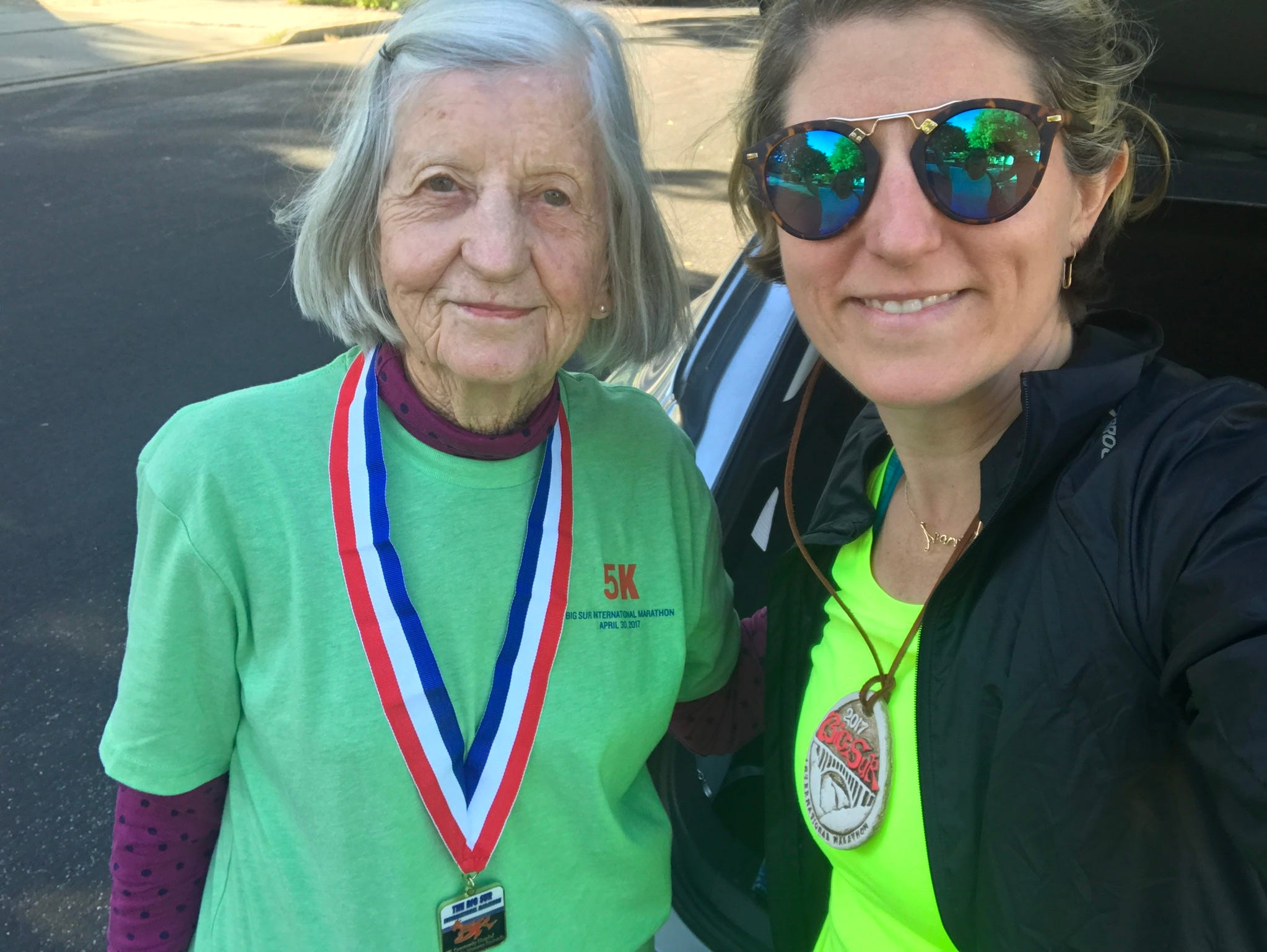
How are you feeling this morning? If you were one of the 60,000 runners from 160 countries who traversed 26.2 miles through New York City yesterday, you probably expected to be sore today. But maybe you didn’t expect to feel flat, blue, or lost.
Each of those runners fought to get to the starting and finish lines, battling injuries, self-doubt, and about a thousand logistical details, from which mid-race fuel to use to which underwear will chafe the least, to which hotel has the easiest commute to the starting line. They put in the work. I hope every single one of them is celebrating big-time today!
But I want to say something to these runners, and to anyone who has crossed a big finish line recently, whether that’s starting a new job, closing an election cycle, finishing a creative project, or moving to a new house. There’s a stage after the big thing that often comes as an unwelcome surprise. If you’re feeling some post-marathon blues today, it might just be the next stage of the journey.
We visualize finish lines and anticipate the sigh of relief that follows, but rarely talk about what comes after.
I call it the post-marathon blues, and I’ve felt it after every single marathon I’ve ever run, and after most other big milestones.
It isn’t determined by the quality of my performance. It hits when I’ve surpassed my goals, and it hits when I have fallen short of them. It happens because getting to any finish line takes millions of choices and singular focus. And after all of that, we’re tired, and often a little aimless.
Research shows I’m not alone and that many endurance athletes describe feelings of emptiness and meaninglessness after a big event.
I’ve talked to other friends recently about how they navigate post-marathon blues, and wanted to share some ideas here for whatever finish line you might be charging toward or looking at in the rearview mirror. I’m not starting my list with rest, because frankly, it’s obvious. Though, not always easy. So, yes, let’s give ourselves time to rest. But maybe we need something more on the horizon for after the long nap.
Milestones are endings. And, of course, they’re also beginnings. Which is the best time to make a change. So here are six things I do to battle the post-marathon blues and to reset for whatever comes next.
1. Name it. This is the biggest one of all. A runner friend and I talk every week, and we remind each other that the blues are coming after the big moments. Knowing that makes them feel so much less catastrophic, and it reminds us that we’ve already built a whole toolkit for this stage of the race.
2. Do the opposite. Movement is medicine, so after months of moving one way, I look for ways to move that use different strengths. The opposite of running is stretching. After a marathon week of travel and lots of sitting last week, I spent the whole weekend on a ladder, solving engineering problems as my mother, daughter, and I built a scale replica of the set of Tangled for my daughter’s 16th birthday party.
3. Reinvest the habit. Training for a race, writing a book, or going after any big goal means building a habit window that usually takes lots of work to build. When I was writing my book, I dedicated 40 minutes every morning, after journaling and making the kids’ breakfast and lunch, but before my workout. When the manuscript was done, I reinvested that routine block in memorizing my TEDx talk. Now I’m using it to share more midlife optimism on social media. I worked too hard to build that habit to let it disappear, so I keep it for whatever creative goal comes next.
4. Choose pleasure-focused rest. I’m not someone who feels restored by binge-watching TV. I do love to read, so I make myself think of something that feels really delicious, like browsing the aisles of Goodwill on a weekday morning, and put it on the calendar like it’s important.
5. Reflect on what you learned. We move right past the lessons so often, and we miss the best part of the journey. I always block an hour on the first workday after a big moment. I write down what the journey taught me about myself, and I celebrate the work I put in, the support I received, and the strength I gained.
6. Set a new goal. There’s tremendous power in having something to look forward to. After a marathon, I often signed up for the next one. Right now, I’m turning my attention toward preparing for our upcoming December Uplifters retreat. It could be a vacation, a creative project, or anything else, but turning on our curiosity and learner brains is a great way to reawaken a sense of purpose and meaning.
If you’re in the middle of your own post-whatever-your-milestone blues, I hope this helps you feel less alone in them. Let’s keep doing big, brave things, even if sometimes it feels weirder and messier than we expect it to.
Every dollar from paid subscriptions goes back to the community, supporting the organizations and the midlife women’s brave projects we feature on the show. Last week I was thrilled to donate on behalf of the Uplifters to one of those projects, and I’d love for you to join me in supporting them.
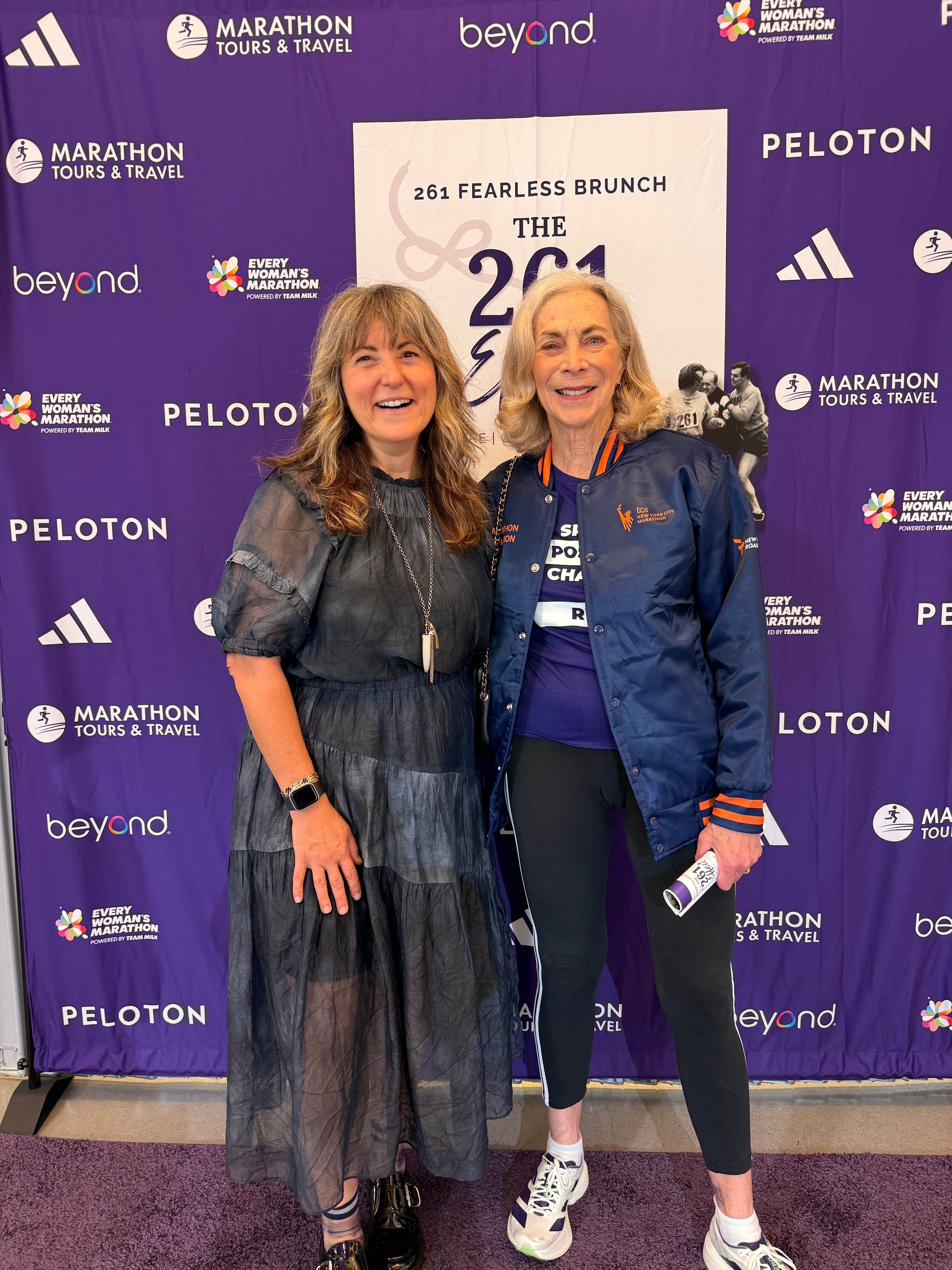
In 1967, women weren’t allowed to compete in marathons. Kathrine Switzer ran anyway. The race director, Jock Semple, tried to physically remove her from the course.
Kathrine understood that the moment was much bigger than her. When Jock attacked her, it was an attack on every woman who had ever been told she didn’t belong. Since that day, she has worked tirelessly to make running accessible to more women. That includes her work to create a women’s Olympic marathon, the pioneering Avon races, and today, 261 Fearless, the extraordinary nonprofit she and Edith Zuschmann co-founded. It has helped thousands of women in 14 countries, from Afghanistan to New Zealand, discover the freedom and community of running.
The ripple effects of that terrifying day have become a movement, and it’s built on the belief that women are stronger together.
I had the great honor of celebrating this historic moment with them last week at Peloton headquarters alongside dear friends.
You can hear more of their story on their episodes of The Uplifters Podcast. Find Kathrine HERE and Edith HERE.
If you watched the NYC Marathon this weekend and feel moved by the 30,000 or so women running, I hope you'll support Kathrine’s incredible work with a donation to 261 Fearless HERE.
With so much gratitude,
Aransas