


My TEDx talk is live! 💛
I did this talk because I was so lucky to grow up surrounded by incredible older women who showed me how big life can be in the second half. Research shows that positive perceptions of age increase our likelihood of doing big, brave things in the second half of life, and astonishingly they also correlate to longer, healthier lives.
Here’s my big, crazy dream. I want one million people to watch it and walk away believing the best is still ahead.
YouTube shows videos to far more people when you do three things.
Watch it on YouTube, all the way to the end.
Leave a comment, even just an emoji or a “hell yes” is awesome.
Share the link with everyone you know.
Thank you a billion times over. Now, on to this week’s newsletter.
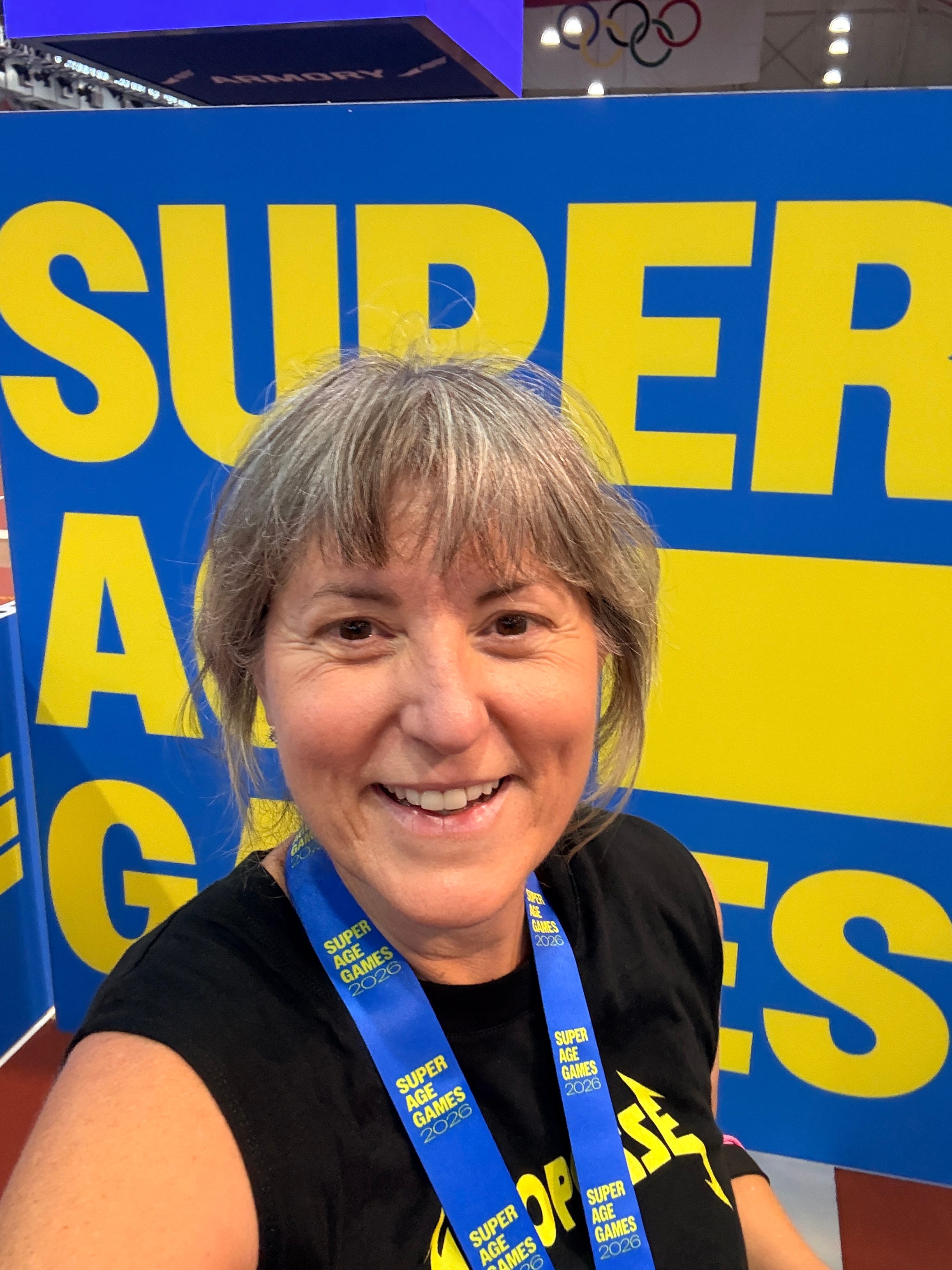
Earlier this month, I competed in the Super Age Games, the world’s first live longevity fitness challenge. From hurdles to balance beams to running and cycling to emotional intelligence and cognition tests, the games were created to measure health and lifespan.
I thought it sounded cool. And I loved the idea of meeting other people who were passionate about aging powerfully. I figured the room would be filled with inspiring people who’d inspire me to keep learning and growing.
Then I realized, with my TEDx only a couple of weeks before the competition, and my manuscript due the week before that, there was no way I could train to perform my best. So what was the point?
In some startling moment of clarity (probably during my morning pages or morning jog because, let’s face it, that’s where all moments of clarity are born for me), it dawned on me: I don’t have to win. I don’t have to do or be my best. I could just do the event, meet the people, soak up the inspiration, and see what my health and lifespan are without the performative, cramming-for-a-test mentality that has been drilled into us since birth.
I liked the idea, but the achiever part of my brain was a little skeptical.
Maybe you know this feeling too?
Could I really just do it without trying to do my best?
I signed up (and when I sign up, I’m probably gonna do what I said, hell or high water), so I was in. I had no time to do anything more for training than my usual routines, which I started building 26 years ago, when I went from ultimate couch potato to someone who ran a block.
Now, I’m the kind of person who doesn’t know how to function without movement. Right now, it means that I am in a gym focused on agility, strength, and balance three days a week, and out for a run 3-4 days a week, with a long walk or bike ride thrown in here and there. My brain gets trained daily by the real-life improv work of interviewing and coaching women and the full presence and attention that demands, along with a career as a solopreneur that requires me to learn new things every day.
OK, so maybe I was training. I just wasn’t cramming for a test.
Turns out it wasn’t such a bad strategy.
I performed in the tests as I would have expected. I scored extremely well in running. Not because of anything I did in the lead-up, but because I have run most days of the week every week for 26 years. I didn’t do very well at the cycling, because I have done very little cycling in my life.
All of my results likely would have been marginally higher had I crammed for the test. But what they were was a celebration of what I’ve spent 26 years building (and not building).
It’s so easy to get sucked into the quick results, and while slow builds and good old-fashioned habits feel way less sexy, ultimately they are the stable foundation that allows us to build new layers of delight and even excellence on.
And yes, this is a very long intro about one very particular experience that feels uncomfortably like a humble brag, “oh look at me, I’m so strong, I’m so fit, I work out every day.” But, really, I promise I’m trying to make a broader point.
As you look back on the past year, you might be tempted to give yourself a grade: “Oh, I did so much this year. A. Oh, I didn’t do so great. C-.” Our grades tend to be outcome-based, but behavioral science shows that process goals are ultimately more rewarding and more sustainable.
A 2022 meta-analysis of goal-setting studies found that process goals had the biggest effect on performance, while outcome goals barely moved it.
An outcome goal is about a result. “I want X to happen.”
A process goal names what you’ll do and becomes a plan of action. “I want to do X at this time, in this way.”
So, as we begin to think about the year ahead, what if this year we focused not on the outcomes we want to achieve but the tiny things we want to make space for in our days?
Instead of “finish the manuscript,” what if the goal was to write for 20 minutes before you open email each morning? Or “grow my newsletter” becomes publish every week, no matter how many people read it. And “get healthier” becomes take a walk after lunch.
The little unsexy stuff compounds and becomes a sturdy foundation for all of the audacious things we want to build.
Everything is easier when we do it together, so come hang with other brave, bold women who are also doing the sometimes boring stuff that sustains the super-not-boring stuff.
Upcoming Uplifters Meet-ups
Lift & Be Lifted: tomorrow night, Tuesday, November 24, at 7 PM ET. RSVP here. This is our monthly Zoom community meet-up where we each share what we’re working on and what we need, and offer one another support and community. Note: There will be no December Lift & Be Lifted as we celebrate the holidays, but we’ll be back in full swing in January.
Holiday Happy Hour at Bar Lola in Hell’s Kitchen. Monday, December 7, at 6 PM. Respond to this email or comment below if you can join, and I’ll add you to the reservation.
Reset Retreat Dec 4-6. SOLD OUT. Join the wait list for the next retreat here.
For paid members of the Uplifters Pod here on Substack
Our weekly Co-Working Cocoon every Friday from 10 to noon ET is cancelled this week for Thanksgiving merriment. Join us here:

Your biggest fan,
Aransas